
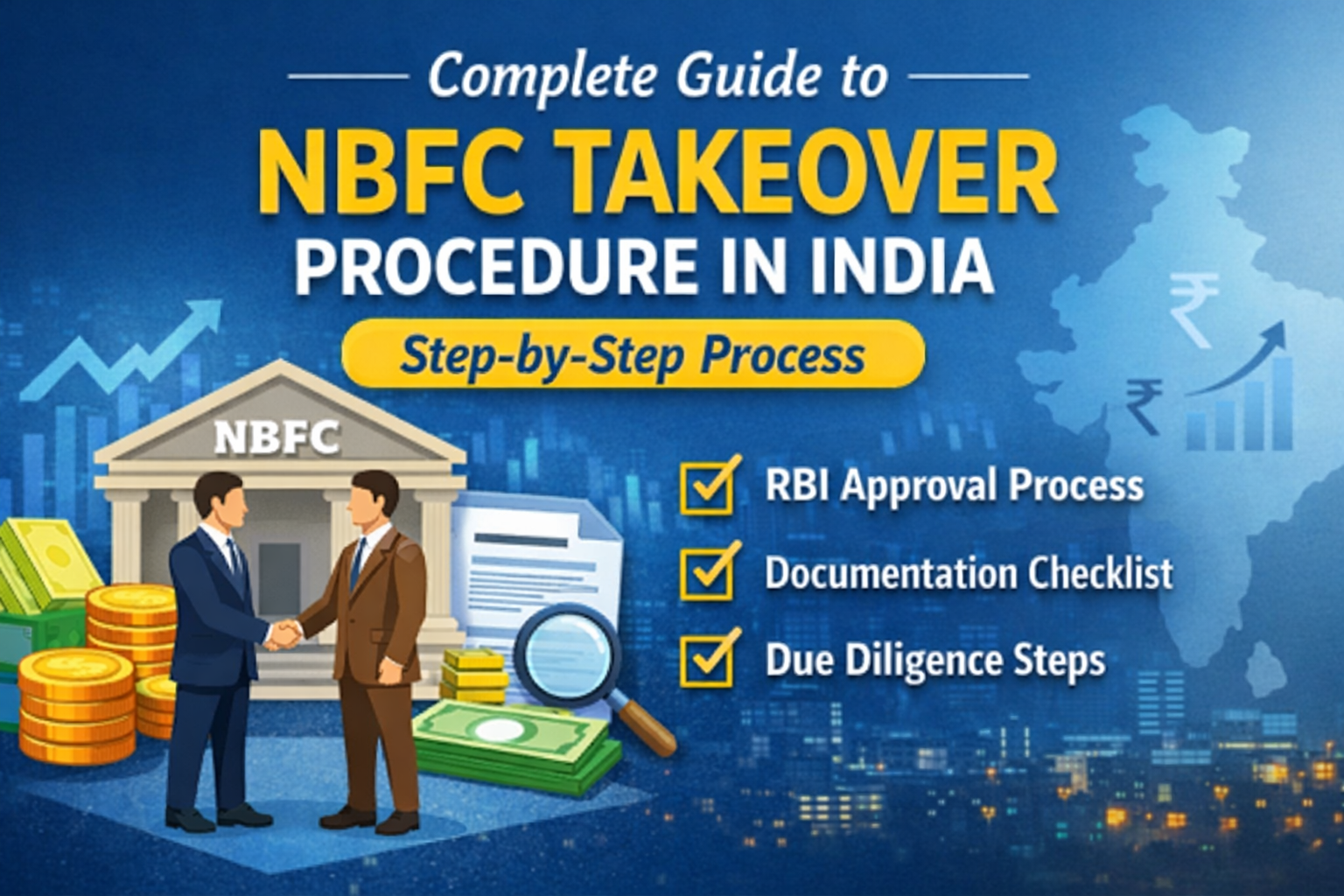
Complete Guide to NBFC Takeover Procedure in India (Step-by-Step Process)
Non-Banking Financial Companies (NBFCs) play a crucial role in India’s financial ecosystem by offering loans, credit facilities, and financial services. Instead of starting a new NBFC from scratch, many businesses prefer acquiring an existing one. This process is known as an NBFC takeover.
In this guide, we will walk you through the NBFC takeover procedure in India, including legal requirements, RBI guidelines, documentation, and step-by-step processes.
What is an NBFC Takeover?
An NBFC takeover refers to the acquisition or transfer of ownership and control of an existing NBFC registered with the Reserve Bank of India.
This includes:
- Transfer of shareholding
- Change in directors
- Change in management control
Why Choose NBFC Takeover Instead of Fresh Registration?
Taking over an existing NBFC offers several advantages:
- Faster process compared to new registration
- Already RBI-approved license
- Established business operations
- Saves time on compliance setup
- Easier market entry
Types of NBFC Takeover
There are mainly two types:
1. Share Acquisition
- Purchase of shares from existing shareholders
- Leads to change in ownership
2. Control Transfer
- Change in management and board of directors
- May or may not involve full share transfer
RBI Guidelines for NBFC Takeover
The Reserve Bank of India has strict rules for NBFC ownership transfer:
- Prior approval is required if:
- Change in control or management
- Change in shareholding exceeding 26%
- New directors must meet fit and proper criteria
- Public notice must be given before takeover
Step-by-Step NBFC Takeover Procedure
Step 1: Due Diligence
Before acquisition, conduct proper due diligence:
- Financial statements review
- Loan book analysis
- Pending litigations
- Regulatory compliance status
Step 2: Memorandum of Understanding (MoU)
- Draft and sign an MoU with existing owners
- Clearly define terms & conditions
- Mention share transfer details
Step 3: Board Resolution
- Conduct board meeting
- Approve takeover proposal
- Pass resolution for ownership transfer
Step 4: Application to RBI
Submit application to the Reserve Bank of India for approval with:
- Proposed director details
- Shareholding pattern
- Source of funds
- Business plan
Step 5: Public Notice
- Publish notice in at least two newspapers
- Inform stakeholders about ownership change
Step 6: RBI Approval
- RBI reviews application
- Verifies compliance and background
- Grants approval if all conditions are satisfied
Step 7: Execution of Share Transfer
- Transfer shares after RBI approval
- Update statutory registers
Step 8: Post-Takeover Compliance
- Update MCA records
- File necessary returns
- Ensure ongoing RBI compliance
Documents Required for NBFC Takeover
- KYC documents of new directors/shareholders
- Net worth proof
- Bank statements
- Income tax returns
- Business plan
- Board resolutions
- Share purchase agreement
Key Compliance Requirements
After takeover, ensure:
- Maintenance of minimum Net Owned Fund (NOF)
- Regular RBI filings
- Proper corporate governance
- Audit and reporting compliance
Cost & Timeline of NBFC Takeover
Estimated Cost
- ₹3 lakh to ₹10 lakh (approx., depends on deal size)
Timeline
- 3 to 6 months (subject to RBI approval)
Common Challenges in NBFC Takeover
- RBI approval delays
- Hidden liabilities
- Non-compliance issues
- Valuation disputes
Conclusion
An NBFC takeover is a strategic way to enter the financial sector quickly and efficiently. However, it requires careful planning, due diligence, and strict compliance with Reserve Bank of India regulations.
If executed properly, it can offer significant business advantages and growth opportunities.
Need Help with NBFC Takeover?
At Induce India, we provide:
- End-to-end NBFC takeover assistance
- RBI approval support
- Legal documentation & compliance
Contact us today to make your NBFC acquisition smooth and hassle-free.