
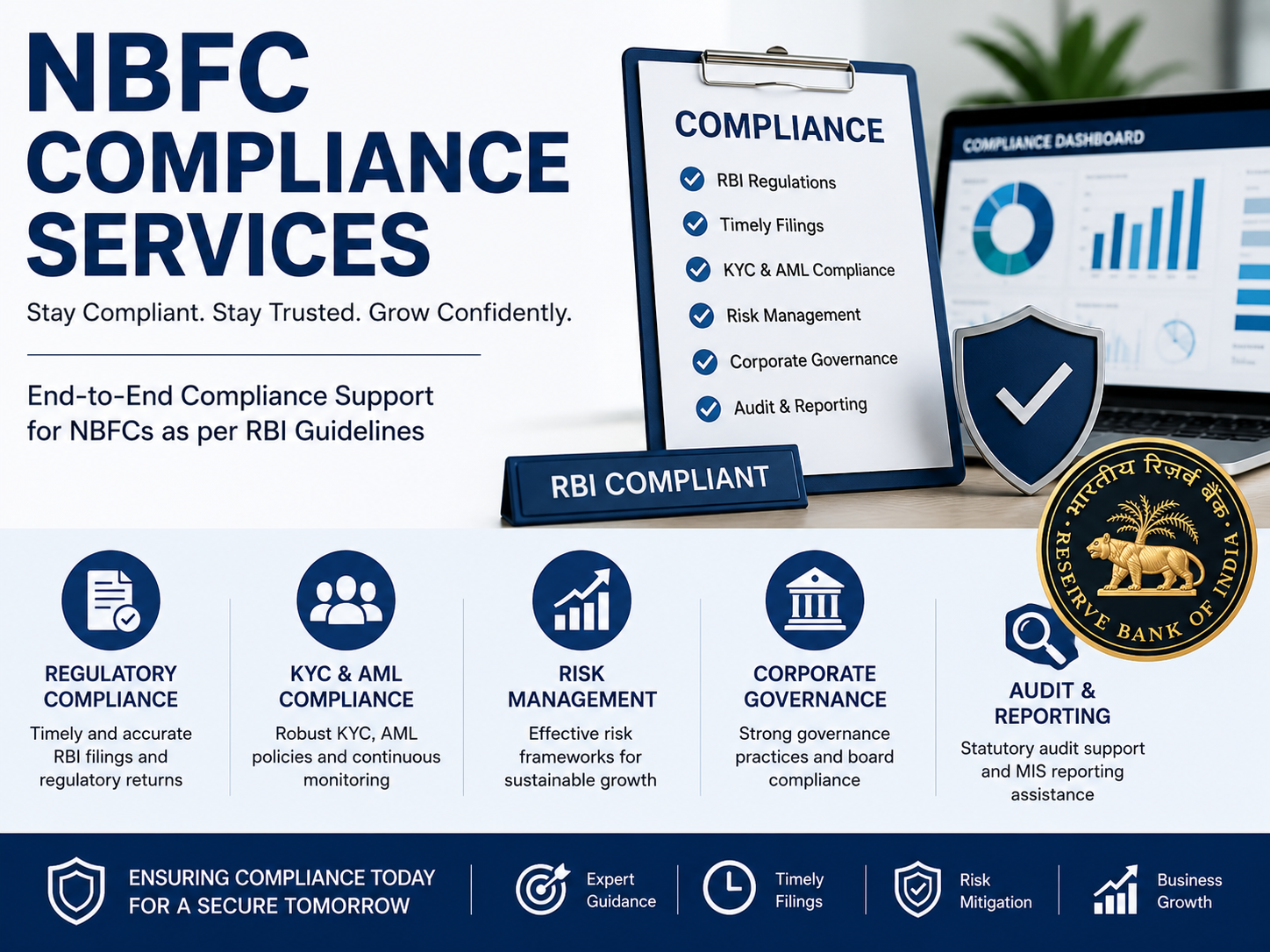
NBFC Compliance Services: Ensuring Regulatory Excellence for Non-Banking Financial Companies
Introduction
Non-Banking Financial Companies (NBFCs) play a critical role in India's financial ecosystem by providing credit, investment, and other financial services to individuals, businesses, and underserved sectors. While NBFCs enjoy significant growth opportunities, they are also subject to stringent regulatory requirements prescribed by the Reserve Bank of India (RBI).
Failure to comply with these regulations can result in penalties, restrictions on operations, reputational damage, and even cancellation of the NBFC license. Professional NBFC Compliance Services help organizations maintain regulatory compliance, manage reporting obligations, and ensure smooth business operations.
What is NBFC Compliance?
NBFC compliance refers to the process of adhering to all legal, regulatory, financial, and operational requirements imposed by RBI and other statutory authorities.
These compliance obligations cover areas such as:
-
RBI regulatory filings
-
Financial reporting
-
Corporate governance
-
Capital adequacy maintenance
-
Anti-Money Laundering (AML) compliance
-
Know Your Customer (KYC) procedures
-
Statutory audits
-
Risk management frameworks
-
Board governance requirements
Compliance is not a one-time requirement but an ongoing responsibility throughout the life of the NBFC.
Why is NBFC Compliance Important?
Regulatory Protection
Regular compliance helps NBFCs operate within RBI guidelines and avoid regulatory scrutiny.
Avoidance of Penalties
Non-compliance may attract monetary penalties, restrictions, or enforcement actions from regulatory authorities.
Enhanced Credibility
A compliant NBFC builds trust among investors, lenders, customers, and regulators.
Business Continuity
Timely compliance ensures uninterrupted operations and minimizes legal risks.
Improved Corporate Governance
Strong compliance systems enhance transparency, accountability, and risk management.
Key RBI Compliance Requirements for NBFCs
1. Annual Returns and Regulatory Filings
NBFCs must submit various returns and reports to RBI within prescribed timelines.
These include:
-
Financial returns
-
Prudential returns
-
Statutory auditor certificates
-
Corporate governance disclosures
-
Risk management reports
2. Capital Adequacy Compliance
NBFCs must maintain minimum capital adequacy ratios as prescribed by RBI to ensure financial stability.
3. KYC and Anti-Money Laundering Compliance
NBFCs are required to:
-
Verify customer identities
-
Monitor transactions
-
Report suspicious activities
-
Maintain customer records
-
Implement AML policies and procedures
4. Fair Practices Code
NBFCs must follow fair lending practices and maintain transparency in customer dealings.
5. Asset Classification and Provisioning
Proper classification of assets and maintenance of adequate provisions for non-performing assets (NPAs) are mandatory.
6. Corporate Governance Requirements
NBFCs must establish:
-
Effective Board oversight
-
Internal control systems
-
Risk management frameworks
-
Compliance monitoring mechanisms
Types of NBFC Compliance Services
Regulatory Compliance Management
Monitoring and managing all RBI-related compliance obligations.
Periodic Return Filing
Preparation and submission of regulatory returns and reports.
KYC and AML Compliance Support
Implementation and review of customer verification and anti-money laundering processes.
Corporate Governance Advisory
Guidance on board structures, governance frameworks, and regulatory best practices.
Internal Compliance Audits
Regular assessment of compliance systems to identify and address potential gaps.
Risk Management Compliance
Development and implementation of policies to manage operational and financial risks.
Statutory Compliance Support
Assistance with Companies Act, taxation, and other legal requirements applicable to NBFCs.
Common Compliance Challenges Faced by NBFCs
Many NBFCs face challenges such as:
-
Frequent regulatory changes
-
Complex reporting requirements
-
Resource constraints
-
Compliance monitoring difficulties
-
Risk management issues
-
Documentation deficiencies
-
Delayed filings
Professional compliance consultants help organizations overcome these challenges effectively.
Benefits of Professional NBFC Compliance Services
Expert Regulatory Knowledge
Professionals stay updated with the latest RBI guidelines and compliance requirements.
Timely Filings and Reporting
Ensures all returns and reports are submitted within prescribed deadlines.
Reduced Compliance Risks
Proactive monitoring minimizes the likelihood of penalties and regulatory actions.
Improved Operational Efficiency
Businesses can focus on growth while experts manage compliance responsibilities.
Comprehensive Documentation Support
Proper record maintenance strengthens regulatory readiness and audit preparedness.
Consequences of Non-Compliance
Failure to comply with RBI regulations may result in:
-
Financial penalties
-
Regulatory investigations
-
Restrictions on business activities
-
Adverse audit observations
-
Reputational damage
-
Cancellation or suspension of NBFC registration
Maintaining a strong compliance framework is essential for sustainable business growth.
Why Choose Professional NBFC Compliance Services?
Professional consultants provide:
-
Compliance calendar management
-
RBI filing assistance
-
Governance and risk advisory
-
Regulatory reporting support
-
Compliance audits and reviews
-
KYC and AML implementation
-
Ongoing regulatory updates
Their expertise helps NBFCs maintain full compliance while minimizing operational and legal risks.
Best Practices for NBFC Compliance
To maintain effective compliance, NBFCs should:
-
Establish a dedicated compliance function
-
Conduct periodic internal audits
-
Maintain accurate records and documentation
-
Monitor regulatory updates regularly
-
Implement robust risk management systems
-
Train employees on compliance requirements
-
Engage professional compliance advisors
Conclusion
Regulatory compliance is a critical aspect of operating a successful Non-Banking Financial Company in India. As RBI regulations continue to evolve, NBFCs must maintain robust compliance systems to protect their business, reputation, and regulatory standing.
Professional NBFC Compliance Services provide comprehensive support for regulatory filings, governance, risk management, KYC, AML compliance, and ongoing monitoring. By partnering with experienced compliance professionals, NBFCs can focus on business growth while ensuring complete adherence to RBI regulations and industry best practices.