
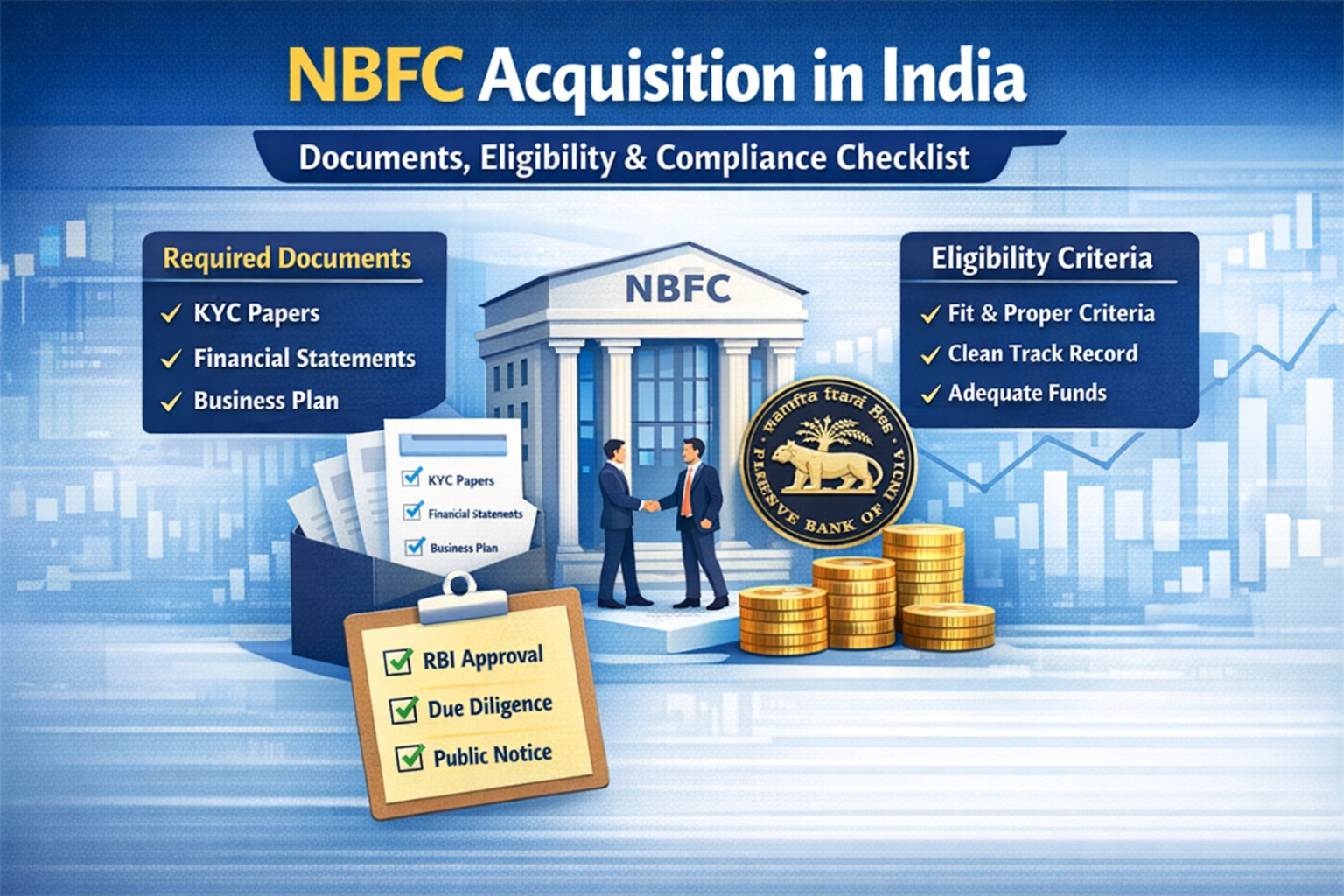
NBFC Acquisition in India: Documents, Eligibility & Compliance Checklist
Acquiring a Non-Banking Financial Company (NBFC) in India is one of the fastest ways to enter the financial services sector. Compared to starting a new NBFC, acquisition saves time, reduces regulatory hurdles, and provides immediate business operations.
However, NBFC acquisition is strictly regulated by the Reserve Bank of India and requires compliance with various legal, financial, and procedural norms.
In this blog, we cover documents required, eligibility criteria, and a complete compliance checklist for NBFC acquisition in India.
What is NBFC Acquisition?
NBFC acquisition refers to the process of purchasing:
- Shares of an existing NBFC
- Control or management rights
- Ownership stake (partial or full)
Such transactions often lead to a change in control, which requires prior approval from RBI.
Eligibility Criteria for NBFC Acquisition
Before acquiring an NBFC, the buyer must meet RBI’s “Fit and Proper” criteria.
Key Eligibility Requirements:
- Strong financial background and clean credit history
- No criminal record or regulatory violations
- Adequate experience in financial/business management
- Transparent source of funds
- Good reputation and integrity
RBI evaluates the acquirer’s credibility before granting approval.
Documents Required for NBFC Acquisition
Proper documentation is critical for a smooth approval process.
1. KYC Documents
- PAN Card
- Aadhaar Card / Passport
- Address Proof
2. Financial Documents
- Net worth certificate (certified by CA)
- Income Tax Returns (last 3 years)
- Bank statements
- Source of funds declaration
3. Corporate Documents (if company acquiring)
- Certificate of Incorporation
- MOA & AOA
- Board Resolution approving acquisition
- Shareholding pattern
4. NBFC-Specific Documents
- RBI Registration Certificate
- Audited financial statements
- Asset and liability details
- Loan portfolio report
5. Business Plan
- 3–5 year growth strategy
- Financial projections
- Target market and services
Step-by-Step NBFC Acquisition Process
1. Identify Suitable NBFC
Look for:
- RBI-registered NBFC
- Clean compliance record
- Healthy financial position
2. Conduct Due Diligence
This includes:
- Financial due diligence
- Legal verification
- Regulatory compliance check
- NPA and asset quality review
3. Sign Memorandum of Understanding (MoU)
The MoU defines:
- Purchase terms
- Valuation
- Payment structure
- Timeline
4. Apply for RBI Approval
Submit application with:
- All required documents
- Promoter details
- Business plan
Approval is mandatory before proceeding.
5. Public Notice
- Publish notice in newspapers
- Allow 30 days for objections
6. Execute Share Transfer Agreement
After approval:
- Transfer shares
- Change directors/promoters
- Transfer management control
7. Post-Acquisition Compliance
- Update records with MCA
- Inform RBI
- Ensure ongoing compliance
Compliance Checklist for NBFC Acquisition
Here’s a quick checklist to ensure smooth acquisition:
✔ Pre-Acquisition
- ✔ Due diligence completed
- ✔ MoU signed
- ✔ Valuation finalized
✔ RBI Compliance
- ✔ Prior RBI approval obtained
- ✔ Fit & Proper criteria fulfilled
- ✔ Source of funds verified
✔ Legal Compliance
- ✔ Share Purchase Agreement executed
- ✔ Board resolutions passed
- ✔ Public notice issued
✔ Post-Acquisition
- ✔ ROC filings updated
- ✔ RBI notified
- ✔ Compliance systems in place
Key RBI Guidelines to Remember
- Prior approval is mandatory for change in control
- Public notice of 30 days is required
- Promoters must meet Fit & Proper criteria
- Full disclosure of funding source is necessary
- Any change must be reported to RBI
Advantages of NBFC Acquisition
- Quick market entry
- Ready business operations
- Existing customer base
- Reduced setup time
Risks Involved
- Hidden liabilities
- Poor asset quality
- Regulatory non-compliance
- Delays in RBI approval
Conclusion
NBFC acquisition in India is a strategic opportunity for investors and businesses looking to enter the financial sector efficiently. However, strict compliance with RBI regulations, proper documentation, and due diligence are essential for success.
By following the right process and maintaining transparency, you can ensure a smooth and legally compliant acquisition.