
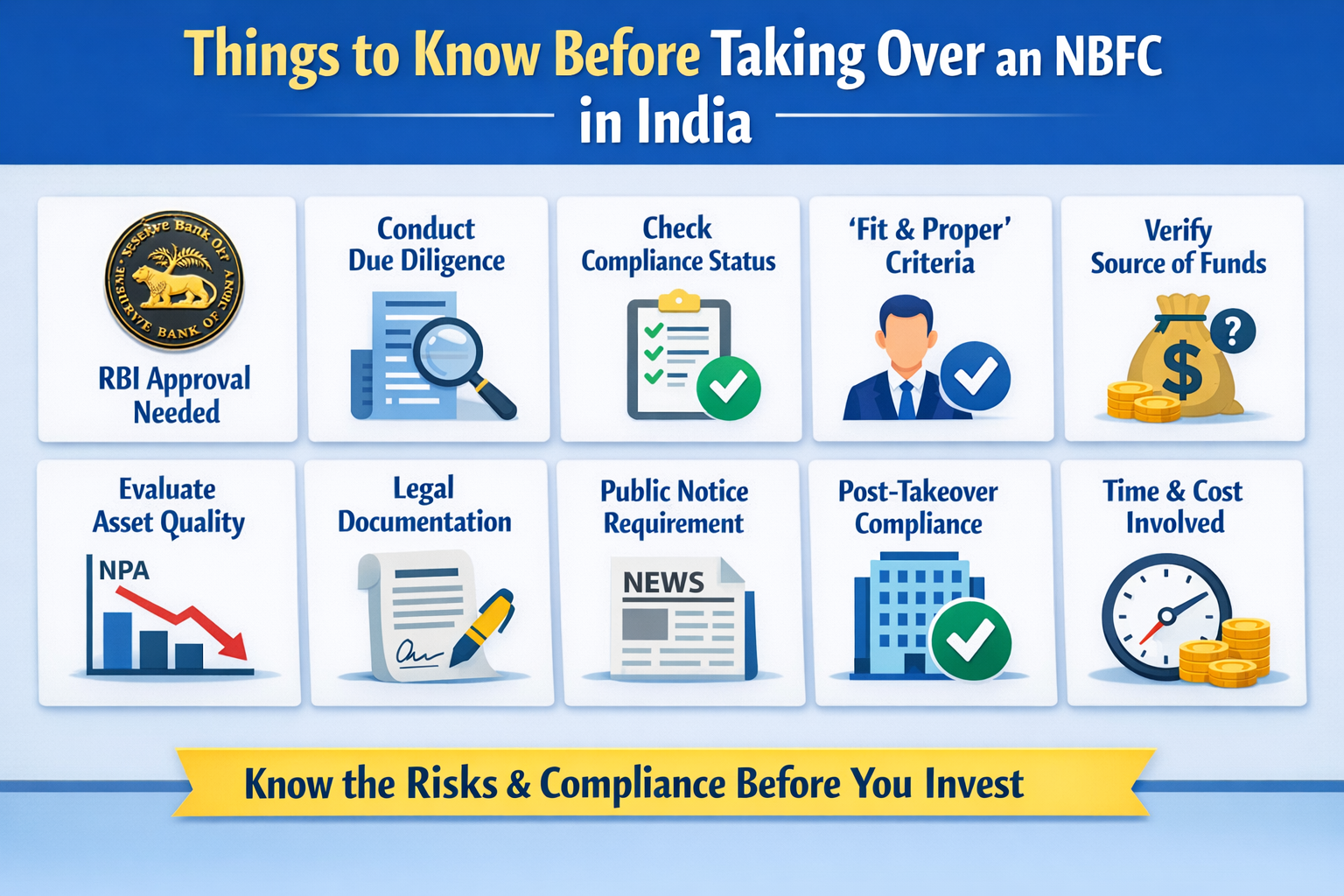
Things to Know Before Taking Over an NBFC in India
Taking over a Non-Banking Financial Company (NBFC) in India is a smart way to enter the financial sector quickly. However, an NBFC takeover is not just a business deal—it involves strict regulatory compliance, financial due diligence, and approval from the Reserve Bank of India.
Before proceeding, it is essential to understand the key factors that can impact your investment and long-term success.
What is an NBFC Takeover?
An NBFC takeover refers to acquiring:
- Majority shareholding
- Management control
- Ownership rights
This results in a change in control, which requires prior RBI approval.
1. RBI Approval is Mandatory
One of the most important things to know is that RBI approval is compulsory in cases such as:
- Acquisition of 26% or more shareholding
- Change in directors or management
- Transfer of control
Without RBI approval, the takeover is considered invalid.
2. Conduct Thorough Due Diligence
Never skip due diligence. It helps you identify risks and liabilities.
Key Areas to Check:
- Financial statements
- Loan portfolio and NPAs
- Pending litigations
- Compliance history with RBI
A poorly evaluated NBFC can lead to major financial losses.
3. Check NBFC Compliance Status
Ensure the NBFC:
- Has a valid RBI registration
- Is filing returns regularly
- Meets capital adequacy norms
- Has no regulatory penalties
Non-compliance can delay or even block RBI approval.
4. Understand “Fit and Proper” Criteria
RBI evaluates new promoters based on:
- Financial integrity
- Professional experience
- Creditworthiness
- Clean legal background
Failing this test can result in rejection of your application.
5. Verify Source of Funds
RBI requires full transparency regarding:
- Source of investment funds
- Banking channels used
- Legitimacy of funds
Any mismatch or unclear source can create legal issues.
6. Evaluate Asset Quality
NBFCs primarily deal with loans and financial assets.
Check:
- NPA (Non-Performing Assets) ratio
- Loan recovery rate
- Risk exposure
A high NPA ratio reduces profitability and increases risk.
7. Legal Documentation is Crucial
Ensure all agreements are properly drafted:
- Memorandum of Understanding (MoU)
- Share Purchase Agreement (SPA)
- Board resolutions
- Share transfer documents
Legal errors can lead to disputes and compliance issues.
8. Public Notice Requirement
Before final takeover:
- Publish notice in newspapers
- Allow 30 days for objections
This is mandatory under RBI guidelines.
9. Post-Takeover Compliance
After acquisition, you must:
- Update records with MCA
- Inform RBI about changes
- Ensure ongoing regulatory compliance
Ignoring post-compliance can lead to penalties.
10. Time & Cost Involved
NBFC takeover is not instant.
Estimated Timeline:
- Due diligence: 2–3 weeks
- RBI approval: 3–4 months
- Public notice: 30 days
Costs Include:
- Legal fees
- Due diligence cost
- Government filings
- Professional consultancy
Advantages of NBFC Takeover
- Quick market entry
- Existing operations and clients
- No need for fresh registration
- Faster return on investment
Risks You Should Be Aware Of
- Hidden liabilities
- Poor asset quality
- Regulatory non-compliance
- RBI approval delays
Conclusion
Taking over an NBFC in India can be a highly rewarding business move, but only if done correctly. Understanding RBI regulations, conducting proper due diligence, and ensuring full compliance are critical for a successful transaction.
A well-informed approach helps you minimize risks and maximize returns.